

Flexibility gets most of the attention, but mobility is the more useful measure of how well your body actually moves — it’s the ability to control a joint through its full range of motion, not just passively stretch into one. Better mobility in a few key areas tends to make everything else, from your yoga practice to how you feel getting up off the floor, noticeably easier. Here are five places to start.
Cat-Cow for Spinal Mobility
On hands and knees, alternate between arching your spine up toward the ceiling (cat) and dropping your belly while lifting your chest and tailbone (cow), moving slowly with your breath. This is one of the simplest ways to work mobility through your entire spine, not just one section, and it’s a genuinely useful way to start almost any movement practice.
Thread the Needle for Thoracic Rotation
From hands and knees, slide one arm underneath your body and rest your shoulder and head on the floor, letting your upper back rotate. Hold for a few slow breaths, then switch sides. Most people are noticeably stiffer through the mid-back (thoracic spine) than they realize, largely from hours spent sitting, and this move targets that rotation directly.
Hip Circles (Hip CARs)
Standing on one leg, lift the opposite knee and slowly circle it — out, back, and around — through the largest pain-free range you can control, keeping the movement slow rather than swinging it. This “controlled articular rotation” trains your hip to actually use its full range, not just pass through it, which matters more for joint health than stretching alone.
Ankle Rocks
Kneeling or in a low lunge, rock your front knee forward over your toes while keeping your heel on the ground, then rock back. Ankle mobility is easy to overlook, but it directly affects how deep you can squat and how stable you feel in standing poses.
Downward Dog to Deep Squat Flow
Moving slowly between downward dog and a deep squat, pausing in each for a few breaths, works your ankles, hips, thoracic spine, and shoulders in a single flow rather than in isolation — a useful way to finish a mobility routine by integrating everything you just worked on.
How Often Is Enough
Ten minutes, three to four times a week, is enough to notice a real difference within a few weeks. Mobility work responds well to consistency rather than intensity, so a short, regular routine will get you further than an occasional long one.
Where Njálla Fits
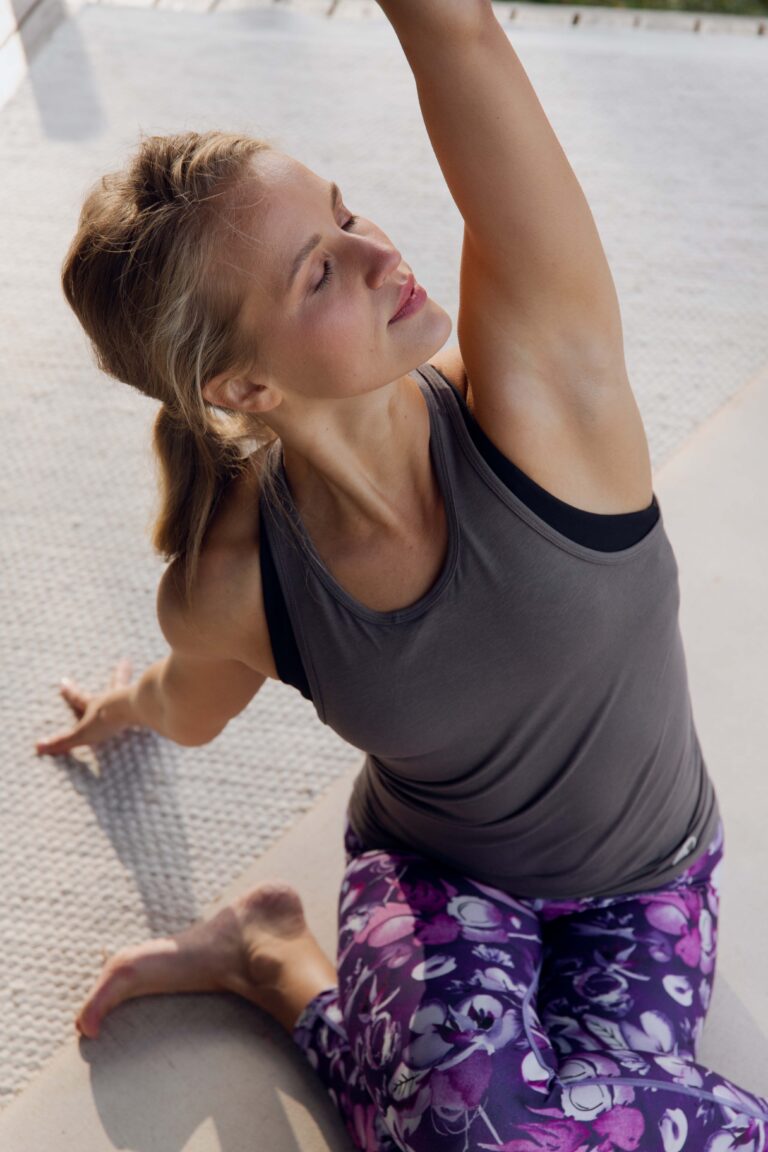
Mobility work asks your clothing to move through a full range with you — deep squats, spinal twists, wide stances. Our leggings are cut with four-way stretch specifically so they don’t restrict you at end range, and our bra tops stay put through all of it.
Want to round out your recovery routine? Read our guide to using a foam roller.

 English
  Finnish