
You Need Less Space Than You Think
A roughly six-by-six-foot area — enough for a mat plus a little room to stretch your arms overhead — is genuinely all you need. That’s the corner of a bedroom, the end of a hallway, or the strip of floor beside your bed. Trying to find a whole spare room before you start practicing is usually just a way of postponing the practice itself.
Clear the Space, Even If It’s Small
The single biggest thing that makes a small yoga corner feel intentional rather than incidental is clearing it of unrelated clutter before you roll out your mat. If the space doubles as something else during the day, a simple room divider, curtain, or even a folding screen can visually separate it during practice.
Working With Nordic Light
Finnish winters mean limited daylight for much of the year, so a home practice space benefits from layered lighting rather than relying on a single overhead bulb — a warm floor lamp or string lights create a calmer atmosphere for an evening practice than harsh ceiling light. In summer, positioning your space near a window to catch natural light works in the opposite direction, especially for a morning practice.
The Few Things Worth Having
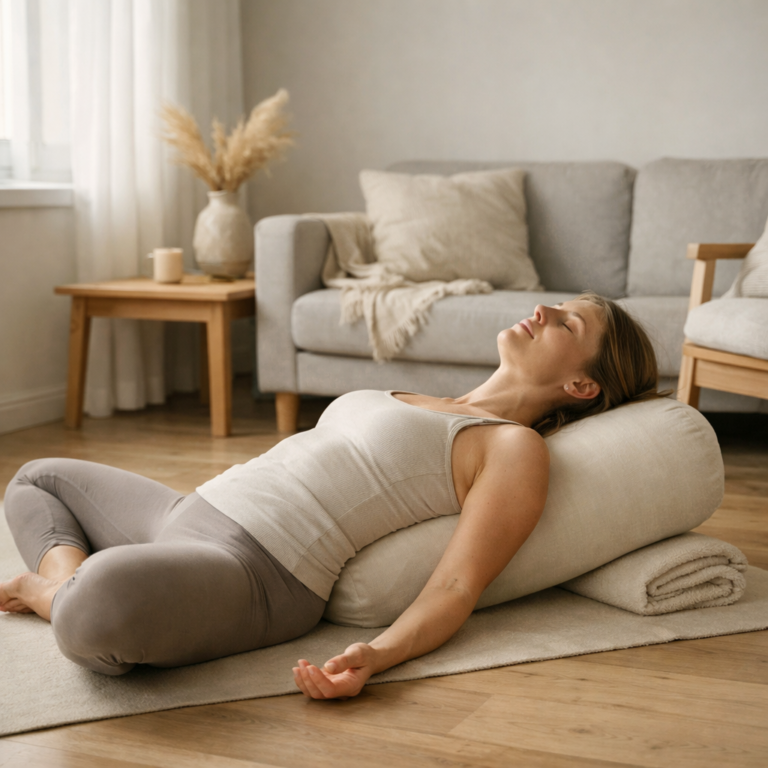
Beyond a good mat, a block or two and a strap make a noticeable difference for accessibility in many poses, and a bolster or firm cushion supports restorative practice. None of this needs to be expensive or take up permanent floor space — most props store easily in a basket or under a bed when not in use.
Making It Feel Like Yours
A plant, a textile with a pattern you love, or simply a candle you only light for practice all help signal to your nervous system that this particular corner means something different than the rest of the room. The goal isn’t a photogenic studio — it’s a space your body recognizes as the place where you slow down.
Explore the Njálla Collection
Shop our sustainable yoga leggings and yoga tops - recycled fabric, handmade Nordic nature art, ethically made. Not sure where to start? Read our complete buying guide.

 English
  Finnish