

“Circular fashion” gets used often, but rarely explained clearly. It’s a bigger idea than simply using recycled fabric — it’s a whole different model for how clothing gets made, used, and eventually handled at the end of its life. Here’s what it actually means, and where activewear fits into it.
The Linear Model vs. The Circular Model
Most clothing today follows a linear path: raw material is extracted, turned into fabric, sewn into a garment, worn for a while, then thrown away — usually ending up in a landfill or incinerator. This “take-make-waste” model treats resources as if they’re unlimited, which they’re not.
Circular fashion tries to close that loop instead. Rather than a straight line ending in waste, the goal is a cycle: materials are recovered, reused, or recycled back into new products, minimizing what actually gets thrown away at the end.
The Core Principles of Circular Fashion
- Designing for longevity. Garments built with durable materials and construction so they’re used for years, not months.
- Using recycled or recyclable materials. Starting with recycled fiber (like rPET from plastic bottles) and, ideally, using materials that can themselves be recycled again at end of life.
- Reducing overproduction. Making only what’s likely to be sold and worn, rather than mass-producing and discounting excess into landfill.
- Extending garment life through care and repair. Proper washing, storage, and repair instead of instant replacement when something shows wear.
- Responsible end-of-life options. Take-back programs, resale, or textile recycling instead of the trash.
Why Activewear Is a Tricky Category for Circularity
Activewear presents specific challenges for circular design. Stretch fabrics blend synthetic fibers like spandex with polyester or cotton, and blended fabrics are notoriously difficult to recycle because separating the fibers at end of life requires specialized processing that isn’t widely available yet. This is part of why the “recycled” half of the circular equation — using rPET as an input — is currently easier to achieve at scale than the “recyclable again” half.
What You Can Actually Do as a Shopper
Full circularity is still an evolving system, but you can participate in a few concrete ways:
- Choose recycled-content activewear over virgin materials whenever possible
- Buy fewer, more durable pieces instead of chasing constant new releases
- Care for what you own properly, so it lasts as long as it’s designed to
- Look for brands offering repair, resale, or take-back programs, and use them when available
- When a garment is truly at the end of its life, look for textile recycling drop-off points instead of the regular trash
Where Njálla Fits In
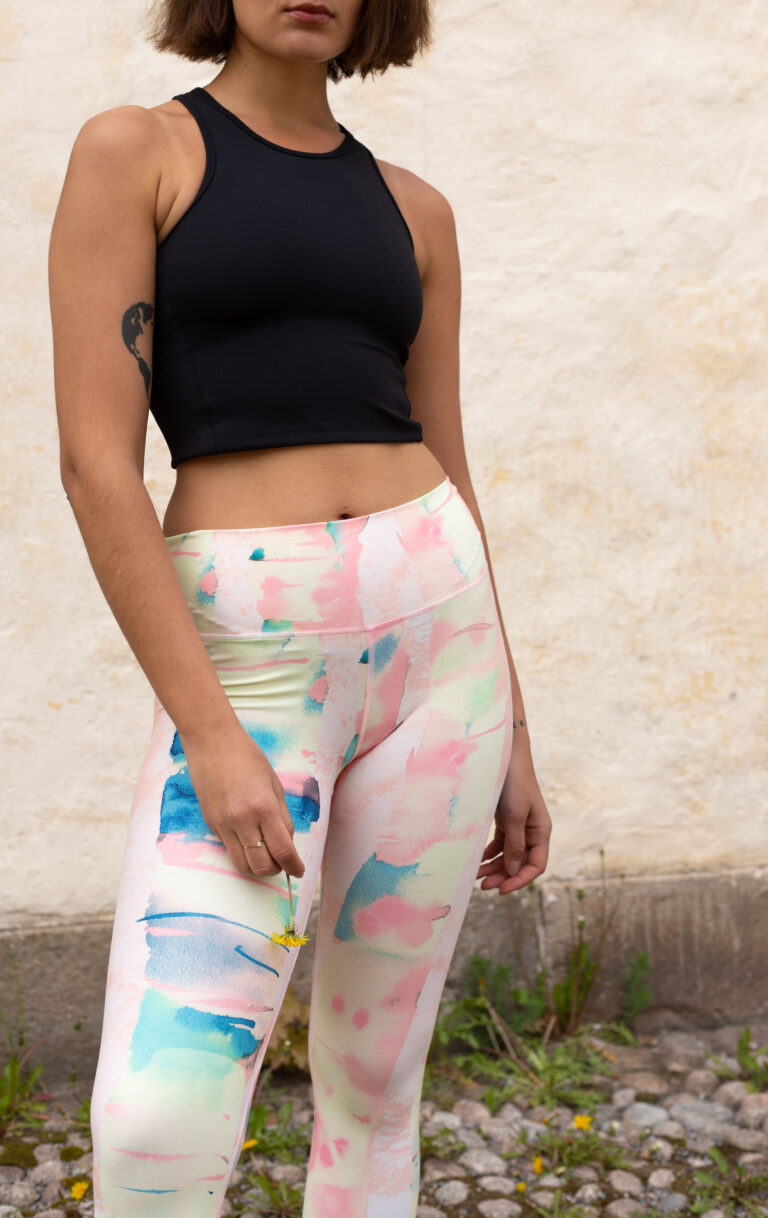
We start our circular story at the input stage: roughly 73% of our leggings, tops, and bra tops are made from recycled polyester, turning existing plastic waste into new, wearable garments rather than drawing on virgin fossil resources. We design each piece — with flat, reinforced seams and four-way recovery stretch — to be worn and washed for years, because a truly circular approach only works if the garment is durable enough to stay in use rather than being discarded quickly.
Circular fashion isn’t a single purchase — it’s a system, and every choice along the way matters. Explore our recycled-material collection as one step in that direction.
Löydä Njállan mallisto
Tutustu ekologisiin joogaleggingseihimme ja joogatoppeihimme - kierrätysmateriaalia, käsintehtyä taidetta pohjoisesta luonnosta, eettisesti valmistettu. Etkö ole varma mistä aloittaa? Lue kattava ostajan oppaamme.

 Finnish
  English